
Champagne corks are rightly popping to celebrate the green light for LNG Canada’s Phase 2 project in Kitimat.
Doubling the terminal’s annual capacity from 14 million to 28 million tonnes is both a mark of confidence in Canada’s economic future and a historic investment.
Phase 2 means thousands of new jobs for blue-collar workers and an even larger Canadian foothold in the global energy market. LNG in British Columbia has always been the result of business and government leaders thinking big and acting ambitiously.
As Phase 2 gets underway, we should be looking ahead to the next generation of B.C. LNG.
What has been built in Kitimat, whether LNG Canada or Cedar LNG, provides an ironclad foundation for further development. Limiting B.C.’s potential to Kitimat would be a terrible mistake.
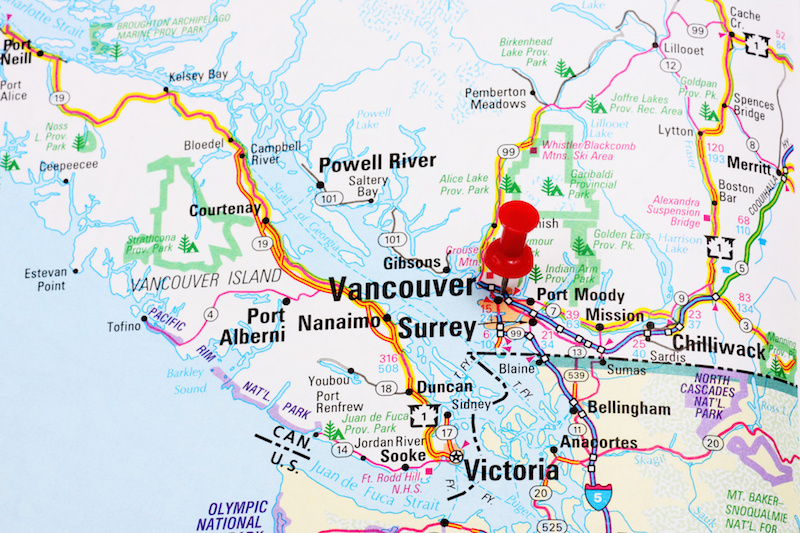
There must be phases three, four and five for natural gas on the West Coast. That will require new terminals and infrastructure. There is nothing extravagant or radical about this. As far back as March 2017, the B.C. government listed 19 LNG export proposals, including projects now being developed near Prince Rupert and at Tilbury in Delta.
While that list did not represent 19 guaranteed projects, it remains a road map for opportunities worth pursuing.
Expanding export capacity along the entire coastline
In Delta, Tilbury’s own Phase 2 expansion was granted a provincial environmental assessment certificate earlier this month, advancing a project intended to serve both domestic and international markets.
Near Prince Rupert, the Nisga’a-backed Ksi Lisims proposal would establish another major export facility in the north. Our development agenda should extend along the whole coast rather than being restricted to just a few successes.
The province has numerous advantages. B.C.’s Montney formation holds one of North America’s largest natural-gas resources, and LNG shipments from Kitimat can reach Asian customers in roughly 10 days, less than half the sailing time from the American Gulf Coast and several days less than shipments originating in the Indian Ocean. Our geography gives us a unique competitive advantage that we must use.
Canada has a role to play in reshaping the world, and its LNG could prove more valuable than armaments or money in strengthening the democratic world.
The European Union has adopted a phased ban on Russian gas imports after years of dependence exposed its vulnerability to Moscow. The door is open to alternatives, and Canada should be at the front of the line, demonstrating its value as a reliable and safe energy supplier.
Our LNG and propane are already doing so in Asia, with Japan, South Korea and other buyers gaining access to energy that does not carry the risks of sourcing it from undemocratic countries.
Furthermore, the greater the competition, the greater the bargaining power available to buyers. This will make Russian gas ever harder to use as leverage against Canada’s partners in Europe and elsewhere. There is no better form of competition than competition to power the free world rather than leaving it dependent on suppliers whose interests clash with our own.
There will always be skeptics who warn that Canada’s LNG industry will be subject to the law of diminishing returns. If those warnings prompt some commercial discipline, so be it, but they are no basis for politically freezing natural-gas development. Suppose diminishing returns do become a reality for LNG: let investors and producers bear the risk. Government needs only act as a proactive partner, not as a guarantor of profit.
What Ottawa and Victoria can do is reduce approvals to a simple, predictable process, something both governments have already taken steps toward, while continuing to streamline reviews and improve domestic infrastructure.
Furthermore, there is more to LNG’s potential than exports alone. The International Energy Agency (IEA) projects that global data centre electricity consumption will surge between 2025 and 2030. Artificial intelligence (AI) will only become more deeply integrated into the economy.
Powering B.C.’s technology and AI ambition
Compared with provinces such as Alberta and Saskatchewan, B.C. has been very slow to support AI. Just 400 megawatts of capacity for AI is being explored through a competitive process to select developers. For context, the newly named John Horgan Dam (formerly Site C) can produce more than double that each day.
If B.C. wants to be more than a tag-along in the AI economy, natural gas can be put to good use. In this mostly empty province, there is ample land and an even more abundant supply of energy from the Montney. Building an innovative B.C. technology economy is complementary to natural gas production.
Abundance lifts all boats.
There will be rewards greater than simple but valuable export revenue.
More LNG development would mean a stronger industrial economy when we need greater economic resilience in the face of a commercially hostile American government, as well as an economy that generates opportunities for tradespeople, engineers and communities across B.C.
All of it should become so commonplace that we can all but take the gains for granted. That is when we will know B.C. has reached its full potential.
Let Phase 2 of LNG Canada be just one more welcome step among many.
Geoff Russ is the editor-at-large of Without Diminishment. He is also a contributor to the National Post, Modern Age, and the Spectator Australia. He can be reached on X.com at @GeoffRuss3.
Resource Works News