
Speaking at the Get It Done BC forum, Energy Minister Adrian Dix delivered an unequivocal message: British Columbia cannot afford to wait.
The Minister of Energy and Climate Solutions spoke Sept. 14 at the Vancouver Club, in a session presented with gold sponsor the Explorers and Producers Association of Canada. He then sat down with EPAC president and CEO Tristan Goodman.
Dix zeroed in on B.C.’s shifting trade dynamic with the United States. While 51 per cent of B.C.’s exports still head south—the lowest proportion among Canadian provinces—he stressed that basing economic policy on that historical dependency is over.
“We cannot afford delay any longer. Not if we’re going to build the economy we need. Not if we’re going to become more resilient in terms of electricity. Not if we’re going to become closer knit and stronger as a society.”
From nothing to fourth in the world
Dix described the LNG buildout as standard industrial policy. “We have to diversify our markets, and we have this unprecedented opportunity to do so … we upgrade the value of our resource and we sell it around the world.”
B.C. had no LNG exports before 2025. Dix expects the province to be sixth in the world by 2030, behind the United States, Qatar, Australia, Malaysia and Russia. By 2035, he expects B.C. to move to fourth, ahead of Russia and Malaysia.
Six major proposals are currently at or approaching a final investment decision. Two key projects—including extensive pipeline infrastructure—represent roughly $60 billion in capital up for decision this year alone. Woodfibre is slated for its first shipments in 2027, followed by Cedar LNG, majority-owned by the Haisla Nation, in 2028. Meanwhile, Ksi Lisims inked another key offtake agreement with an Australian buyer the day of the address.
Dix commended project developers and their First Nations partners for driving progress. Ksi Lisims is co-owned by the Nisga’a Nation, the Squamish Nation partnered on Woodfibre’s environmental review, and Musqueam is actively involved in Fortis’s Tilbury expansion.
With B.C. on track to become Canada’s top natural gas producer by 2032, Dix offered a candid assessment of corporate responsibility.
“So the industry has to do better, and they are,” Dix said.
The power problem underneath it all
While B.C.’s electricity demand remained virtually flat from 2007 until recently, BC Hydro now projects a staggering 50 per cent surge in coming years.
Dix tied that forecast straight to the utility’s response: “We cannot afford the status quo in many areas. We cannot afford it, and that’s why BC Hydro has engaged in, I think, its most aggressive development program, powering growth, in the history of our province.”
With nine new major mines approved last year, alongside expanding LNG and tech sectors, demand for firm power is surging faster than traditional grid infrastructure can be built.
To bolster supply, the province has moved swiftly, securing 14 electricity purchase agreements with independent power producers—most forged in partnership with First Nations. Construction on initial projects kicks off in 2026, representing an estimated $10 billion in capital investment.
Dix underscored policy predictability as essential: following a 2024 power call that selected winning bids, a follow-up call is already scheduled for 2028, providing investors with a dependable timeline.
Dix also flagged a legislative change coming this fall. The government intends to amend the Clean Energy Act so projects previously barred from consideration can enter the province’s electricity plans.
“We need clean energy, and we have to consider all the options,” Dix said.
Grid transmission remains equally critical. Dix highlighted BC Hydro’s North Coast Transmission Line as the vital link connecting clean energy to northwestern mining projects, while pointing to modernized regulations that finally enable large industrial customers to tie into the grid.
Fewer laws, longer runway
Goodman pressed on the investment climate, and on royalties in particular.
Dix confirmed that a updated royalty framework will take effect Jan. 1, 2027, with full details expected soon. The changes follow years of discussions with industry, Treaty First Nations, and local communities. He also pointed to progress on a 10-year revenue-sharing agreement with Treaty 8 First Nations.
Underpinning these initiatives is a broader philosophy of regulatory restraint. Pointing to his own party’s history, Dix noted that after taking office in 1991, the NDP passed 92 bills in year one, 74 in year two, and 54 in year three.
“That industry and society cannot absorb that level of hyperactive change,” Dix said.
Cautioning that cash-strapped governments often reach for legislation because it appears cost-free, Dix warned that such regulatory hyperactivism creates unsustainable friction for industry.
Addressing reconciliation, Dix pushed back against claims that Indigenous rights impede investment. He pointed to 38 First Nations involved in midstream agreements and direct First Nations equity across every active LNG project as proof of a new paradigm.
“They are wrong,” Dix said. “These are our largest investments, and some of them the largest in Canadian history, and they’ve been made during this period.”
He said abandoning DRIPA wouldn’t protect those benefits. It would put them at risk.
Forestry still comes first
The strongest line of the speech wasn’t about energy at all.
Dix singled out forestry as B.C.’s foundational industry, emphasizing its deep geographical footprint. Entire communities across the province, he reminded the audience, exist directly because of forestry.
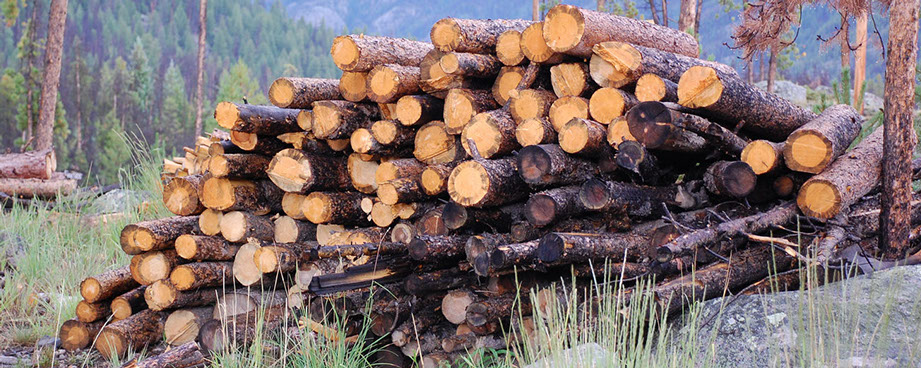
He connected forestry back to energy policy through firm power generation. BC Hydro needs reliable electricity, and wood-waste energy from forest companies can help fill the gap. While converting mills into power generators isn’t a cure-all, Dix noted it can strengthen plant economics.
Acknowledging severe external headwinds, Dix called out market distortion from long-standing U.S. softwood duties and market dumping by Chinese producers.
“We cannot allow the U.S. and the Chinese governments, through their dumping activities, to destroy a forest industry which has created B.C. as it stands today,” Dix said.
He acknowledged the difficulty. Energy offers upside. Forestry brings hard problems with no easy answers.
Industry’s role
Goodman closed by asking what the industry could do for government.
Dix answered by focusing on young people. He described a job market disrupted by AI and a decade of instability. Many of the jobs that built his own career, he said, would not be available to someone starting out now.
His request was specific. When work appears in Kitimat, people from Kitimat should be able to take it. When work appears in B.C., British Columbians should be able to take it. That requires training, and Dix said the private sector carries as much of that load as government does.
“It is our generational obligation.”
Ian Biana writes for the Resource Works Accelerate team and can be reached at [email protected].
Resource Works News