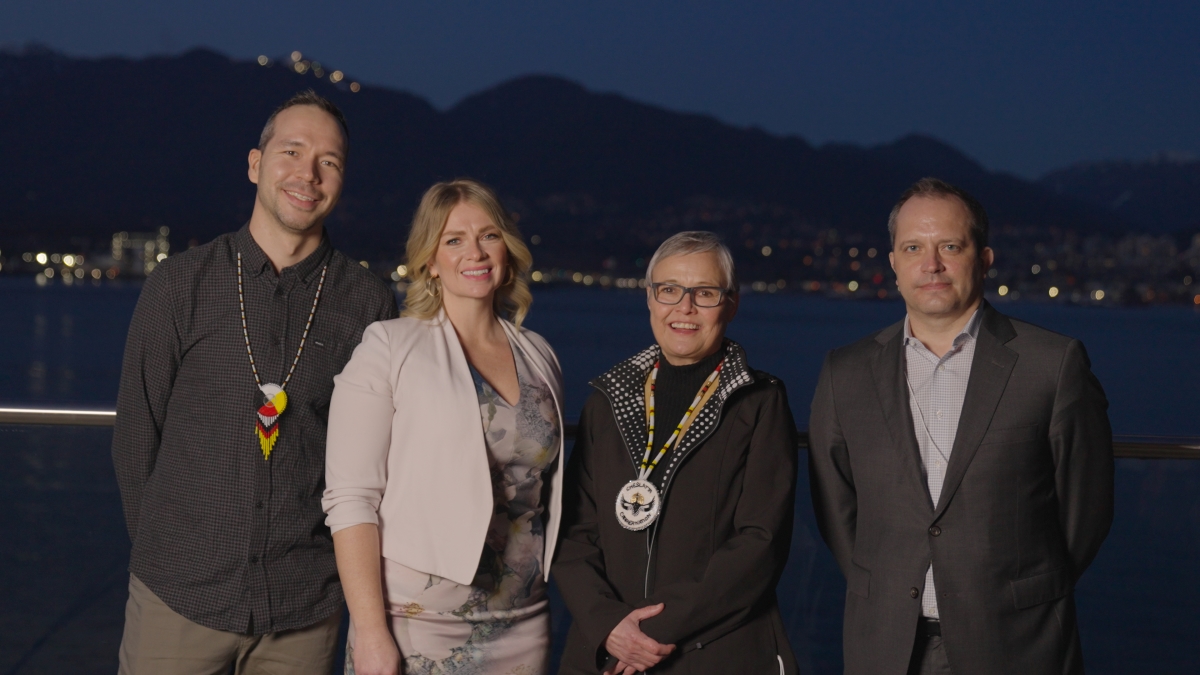

On Power Struggle, Stewart Muir sat down with Geoffrey Tauvette, an engineer with more than 25 years in commercial aviation and now Executive Director of the Canadian Council for Sustainable Aviation Fuel (C-SAF). His mission is nothing short of a revolution: to make flying sustainable without grounding an industry that supports more than 810,000 Canadian jobs.
“I’ve been in aviation for over 25 years, always in the fuel environment,” Tauvette said. “What I’m doing now is really trying to change the industry.”
The fuel that changed flight—now changing again
Conventional jet fuel, Tauvette explained, “sits a little below diesel fuel” in the refining process—roughly 10 percent of a barrel of crude. But a new generation of fuels is emerging. “Sustainable Aviation Fuel is a jet fuel replacement,” he said. “It’s made from renewable materials and produces, on a lifecycle basis, way less emissions compared to a normal barrel of jet fuel.”
SAF, he says, is “the biggest solution for the industry in terms of reducing its emissions.”
The global aviation sector was one of the first to adopt decarbonization targets. Airlines have shaved weight, improved aerodynamics, and rolled out aircraft that are 10–15 percent more fuel efficient than the previous generation. But all the efficiency in the world won’t matter without a cleaner fuel source.
The cost turbulence
The catch? Price.
“Jet fuel usually represents about 25 percent of an airline’s costs,” Tauvette said. “How do we work in a fuel that today is anywhere from three to eight times more expensive than current fuel?”
At present, Sustainable Aviation Fuel makes up less than two percent of global jet fuel consumption. Yet demand is poised to soar as countries, corporations, and consumers seek low-carbon travel.
The Canadian advantage—still untapped
Tauvette argues that Canada has “all the right ingredients” to lead the SAF revolution: sustainable feedstocks, advanced refining capacity, and a market of willing airlines. “We refine hard-to-refine stuff, and this is what this is,” he said. “If we make it affordable enough, all the international airlines flying into Canada will pick it up as well.”
C-SAF outlines the immediate opportunity: fuels made from wastes like used cooking oil, as well as forest and agricultural residues that can be converted into low-carbon “biocrudes.” Down the road, carbon captured from the air or industrial processes could also be combined with renewable hydrogen to produce jet fuel with near-zero net emissions.
The problem isn’t imagination—it’s investment. “Unfortunately, we need support from the government,” Tauvette said. “Support through some form of incentive-type mechanism to help create the environment to make those investments to put the manufacturing in place.”
The runway to the future
Without clear policy, price parity, and production incentives, Canada risks being left on the tarmac while others soar ahead. As Tauvette puts it, this is the moment to act. “We have everything we need,” he said. “Now we just need the will to build it.”
· Power Struggle video: https://www.youtube.com/watch?v=pIm5aVAChTY
· Power Struggle audio and transcript: https://ow.ly/x1Tr50XmFV6
· The Canadian Council for Sustainable Aviation Fuel: https://c-saf.ca/
· Geoffrey Tauvette on LinkedIn: https://ow.ly/EfIf50XmFNf
· Stewart Muir on LinkedIn: https://ow.ly/Smiq50UWpSB
· Power Struggle on LinkedIn: https://ow.ly/KX4r50UWpUa
· Power Struggle on Instagram: https://ow.ly/3VIM50UWpUg
· Power Struggle on Facebook: https://ow.ly/4znx50UWpUs
· Power Struggle on X: https://ow.ly/tU3R50UWpVu
Resource Works News